SEO is easier when you sort it in the right order. Start with the essential pages on your website, then your Google Business Profile, and work through the other ten folders from there. Each folder below gets a few sentences on what it is and why it matters, so you can see the whole SEO map at a glance.
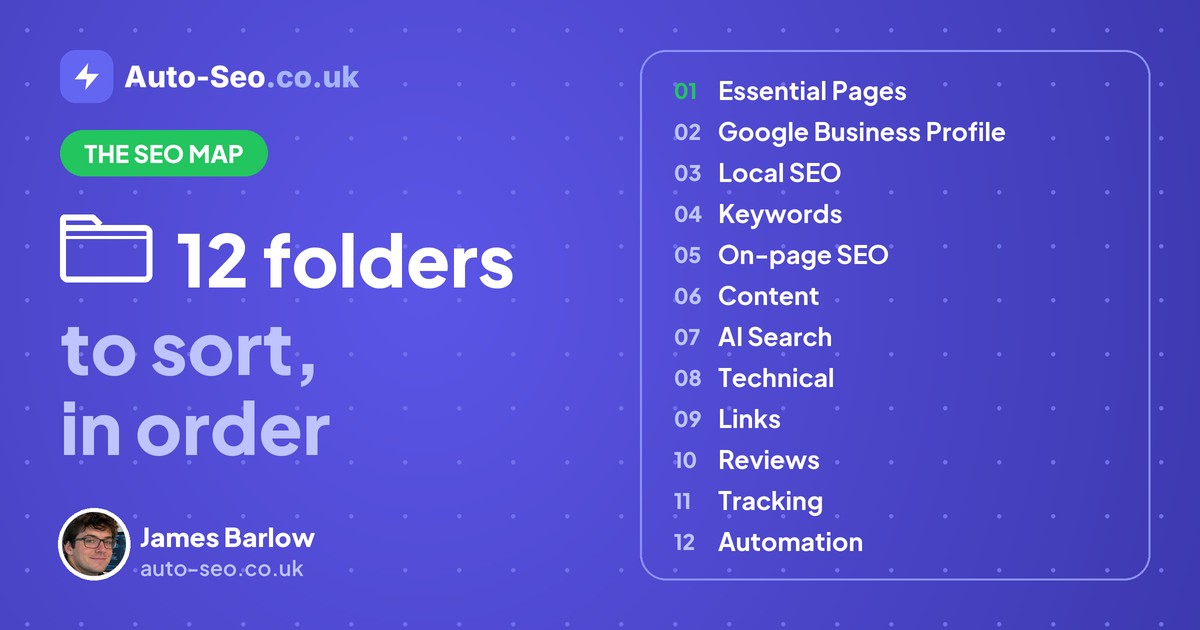
Think of it like a filing cabinet. If the first drawer is empty, it doesn't matter how tidy the rest are.
01. Essential pages
This is the folder most people skip, and it's the one that matters most. You need a home page that says what you do and where, one page for each service, and a page for each main town you cover. Add an about page with real photos, a contact page with a map and a short set of FAQs.
Every other folder on this list sends people back to these pages. That's why at Auto-SEO we build your essential pages first, before blog posts.
02. Google Business Profile
Your free Google Business Profile is often the first thing a customer sees when they search for a local service. Pick the right main category, list every service and area, and keep your opening hours accurate. Fresh photos and regular updates show Google, and your customers, that you're open and busy.
03. Local SEO
Local SEO helps Google trust where you are and who you serve. Make sure your business name, address and phone number match everywhere they appear online, from your website to trusted UK directories. Mention the towns you cover naturally on your pages, and get involved with local clubs, events and news where it suits you. Our guide to local search ranking factors in 2026 explains what Google weighs most.
04. Keywords
Keywords are simply the words your customers type into Google. They're rarely the trade terms you use at work, so think "boiler repair in Leeds" rather than the model number of the part. Give each page one main phrase, and look out for questions, cost searches and urgent "same day" searches.
05. On-page SEO
On-page SEO is the small details on each page that tell Google what it's about. That means a clear page title, one main heading, a short description that earns the click and images with sensible names and alt text. Link your own pages together, and put a call button near the top so visitors can get in touch quickly. Our guide to a free SEO check shows how to spot which of these are missing.
06. Content
Helpful articles answer your customers' questions before they pick up the phone. Simple guides, write-ups of finished jobs with photos and seasonal advice all work well. Keep a steady rhythm and refresh older posts now and then, because a regular trickle beats a big burst followed by silence.
07. AI search
More people now ask AI tools such as ChatGPT, Gemini and Google's AI Overviews who to call. These tools lean on clear, consistent information, so put plain answers near the top of your pages and keep your facts the same everywhere online. Mentions on trusted local websites help them understand who you are. Our AI visibility check shows whether ChatGPT recommends your business.
08. Technical
Technical SEO covers the behind-the-scenes checks that let Google read your site properly. Your site should be fast on a phone, load securely over HTTPS and have a sitemap submitted in Google Search Console. Fix broken pages, add redirects when a page moves and make sure Google is allowed to index the pages you want found. Our free website health check scores your site out of 100.
09. Links
Links from other websites act like recommendations, and quality matters far more than quantity. Good places to start are your suppliers and partners, trade bodies you belong to, local sponsorships and advice pieces for local press. Steer clear of cheap link packages, as they can do more harm than good.
10. Reviews
Fresh, genuine reviews help you win the click and the call. Ask every happy customer, and make it easy with a one-tap review link sent straight after the job. Reply to every review, answer any bad ones calmly and show your best reviews on your website. Our guide to a free GMB audit shows how your reviews compare with the businesses around you.
11. Tracking
Tracking tells you what's working, so you can do more of it. Google Search Console and Google Analytics are both free, and they show which searches and pages bring people to your site. Count your calls and enquiries too, and take a few minutes each month to look at how your map rankings are moving across your area.
12. Automation
The last folder keeps everything moving without eating into your evenings. New articles can be written and published on a schedule, shared to your social pages and backed up by review requests after each job. Monthly reports and alerts mean you only need to step in when something needs your attention.
Why the order matters
It's tempting to jump straight to blog posts or links, because they feel like progress. But if your service and area pages are missing, all that effort points visitors and Google at a website that can't answer the basic question: "Do you do this, here?"
Sort folder 01 first and every other folder works harder for you. Get your Google Business Profile and local details right next, and the rest of the map becomes a steady routine rather than a mountain.
Where to start on your SEO map
Pick one folder this week. If you're not sure your essential pages are all there, start with those. Our £1 trial comes with a free website audit that shows what needs fixing first.
If you'd rather have it handled for you, our team builds your essential pages first, then keeps your website growing with regular articles tailored to your business. Have a look at our plans and prices, or get in touch with our team, and we're happy to help.